
Introduction
When someone faces family court without a solicitor, the process can feel overwhelming — full of forms, hearings, and legal jargon.
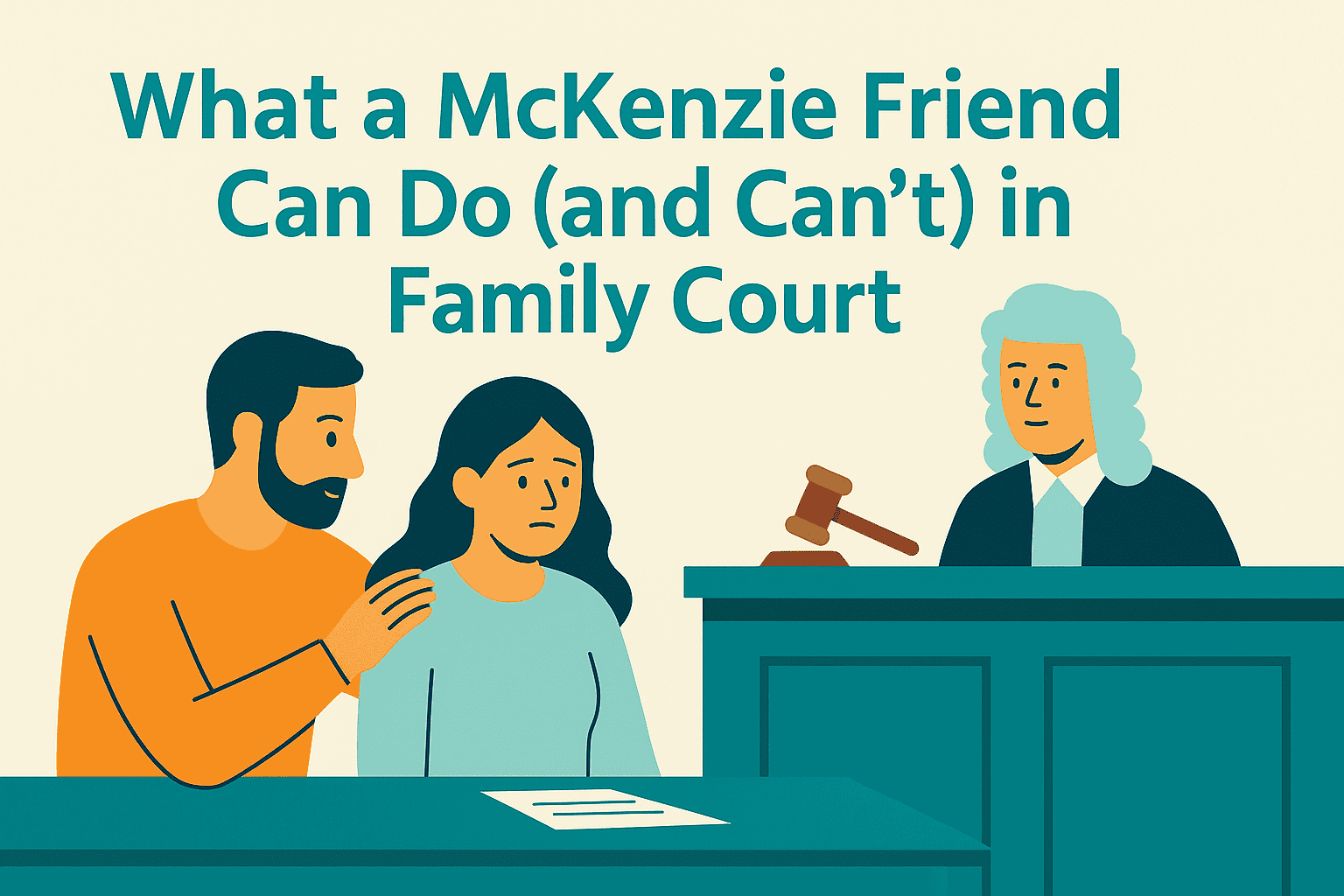
That’s where a McKenzie Friend can make a real difference. But before you rely on one, it’s essential to understand exactly what a McKenzie Friend can and can’t do under English law.
✅ What a McKenzie Friend Can Do
The right to have a McKenzie Friend is well-established in England & Wales. It comes from case law (McKenzie v McKenzie [1970] 3 All ER 1034) and is recognised in Family Procedure Rules 2010, Practice Direction 27A.
Here’s what you’re legally entitled to expect from a McKenzie Friend:
- Provide quiet support in court
They can sit beside you, help you stay calm, and take notes while you speak to the judge. - Help you organise and understand documents
Many parents struggle with forms like C100, C1Avagy Állásfoglalások (Position Statementek).
A McKenzie Friend can help you prepare and present these clearly. - Offer moral and emotional support
Especially in stressful hearings involving children, having a calm, experienced person beside you can make a huge difference. - Give practical guidance on procedure
They can explain what happens at each stage — from MIAM to FHDRA, fact-finding hearingvagy final hearing. - Negotiate informally outside the courtroom
A good McKenzie Friend helps you communicate constructively with the other side — focusing on solutions, not conflict.
Parents often ask whether McKenzie Friends are regulated and what protection exists in practice. This is explained in more detail here.
❌ What a McKenzie Friend Cannot Do
Despite the name, a McKenzie Friend is not a solicitor, barrister, or legal adviser.
The court allows them to assist you, not to act for you.
Here are clear limits under current rules:
- They cannot speak for you in court (no “rights of audience”)
Only in rare cases — with permission of the judge — can a McKenzie Friend address the court directly. - They cannot sign or submit documents on your behalf
All filings must be made by you personally as a “litigant in person”. - They cannot give formal “legal advice”
They can explain processes and options, but not advise in the way a solicitor would under a regulated framework. - They cannot claim to be legally qualified unless they actually are
Anyone pretending to be a lawyer or using misleading titles breaches the Legal Services Act 2007.
🧭 Why Many People Still Choose a McKenzie Friend
According to the 2018 MoJ research on fee-charging McKenzie Friends, most clients choose them for three reasons:
- Affordability: typically between £15 and £90 per hour — a fraction of solicitor rates.
- Accessibility: many are available outside office hours, by phone or video.
- Emotional understanding: clients valued being “listened to” and supported personally.
“For many litigants in person, McKenzie Friends filled a vital support gap — offering reassurance and structure through an intimidating process.”
— Study of Fee-Charging McKenzie Friends, MoJ Research, 2018
In some situations — particularly in high-conflict or complex family court cases involving Cafcass, allegations, or entrenched parental disputes — additional preparation and structure may be needed beyond standard support.
⚖️ The Judge’s View
Judges generally welcome McKenzie Friends who act responsibly and stay within their role.
Problems arise only when someone tries to act like a lawyer — speaking out of turn, charging excessive fees, or giving misleading advice.
If that happens, the court can:
- Refuse them permission to assistvagy
- Ban them from acting in that or future cases.
So, a professional McKenzie Friend will always respect boundaries, remain courteous, and focus on helping you present your case clearly.
💡 How to Get the Most from Your McKenzie Friend
- Ask for a written agreement — it should explain what they’ll do and what they’ll charge.
- Be open about your case and documents — honesty helps them prepare you properly.
- Discuss your goals early — know whether you want settlement, contact, or clarity from the court.
- Stay in control — remember, the case is your case. They’re there to empower, not replace you.
Final Thoughts
A McKenzie Friend isn’t a lawyer — but with the right person, they can be an ally, coach, and steady presence through one of the hardest experiences of your life.
The key is knowing where the line is, and choosing someone who supports you within it.
Need Support in Family Court?
Everyman Justice provides calm, affordable McKenzie Friend assistance across Suffolk, Norfolk, Essex, Cambridgeshire, and nearby counties.
Get in touch today for practical help — Lépj kapcsolatba az Everyman Justice-szal.


Vélemény, hozzászólás?